
Can HBOT Help With Fibromyalgia and Chronic Fatigue?
So, can HBOT actually help with fibromyalgia and chronic fatigue? The answer lies in understanding the underlying mechanisms of these conditions and how oxygen, inflammation, and the nervous system balance all play a role.
This article explores the science, the latest research, and how HBOT may support the body in ways that align with the needs of people dealing with chronic fatigue and fibromyalgia.
Fibromyalgia and chronic fatigue syndrome are often grouped because they share several overlapping symptoms. While they are distinct conditions, both involve systemic dysfunction that affects multiple areas of the body.
Fibromyalgia is primarily characterized by widespread musculoskeletal pain, tenderness, and heightened sensitivity to stimuli. Many individuals also experience sleep disturbances, cognitive challenges often referred to as brain fog, and persistent fatigue.
Chronic fatigue syndrome, on the other hand, is defined by profound, long-lasting fatigue that is not improved by rest. This fatigue can be accompanied by cognitive impairment, unrefreshing sleep, and worsening symptoms after physical or mental activity.
Both conditions are complex and not fully understood. However, several common factors are often involved:
These factors create a cycle where the body struggles to produce energy, regulate pain, and maintain balance.
One of the biggest challenges with fibromyalgia and chronic fatigue is that they do not have a single clear cause. Instead, they involve multiple systems in the body interacting in complex ways.
Traditional treatments often focus on symptom management, such as reducing pain or improving sleep. While these approaches can be helpful, they do not always address the underlying physiological imbalances.
This is why many individuals continue searching for additional strategies that may support the body more comprehensively.
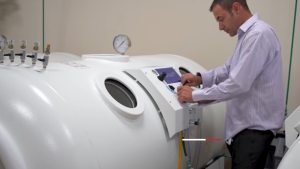
Hyperbaric oxygen therapy involves breathing oxygen in a pressurized chamber. This process allows oxygen to dissolve more efficiently into the bloodstream and reach tissues throughout the body at higher concentrations.
Under normal conditions, oxygen is primarily carried by red blood cells. In a hyperbaric environment, oxygen is also delivered through plasma, allowing it to reach areas with limited circulation.
This increased oxygen availability can influence several systems that are often involved in fibromyalgia and chronic fatigue.
Oxygen is essential for nearly every function in the body. It plays a key role in energy production, cellular repair, and maintaining normal physiological processes.
In conditions like fibromyalgia and chronic fatigue, the body may struggle with oxygen utilization at the cellular level. This can contribute to low energy, poor recovery, and increased sensitivity to stress.
By increasing oxygen delivery, HBOT may help support these processes and create a more favorable internal environment.
Recent research has explored the potential role of HBOT in supporting individuals with fibromyalgia and chronic fatigue.
A 2023 systematic review and meta-analysis examined multiple studies on hyperbaric oxygen therapy for fibromyalgia. The findings suggested that HBOT was associated with improvements in pain levels, fatigue, and quality of life for some participants.
While more research is needed to establish standardized protocols, these findings highlight the growing interest in HBOT as a supportive therapy for chronic conditions.
HBOT may influence several key mechanisms that are commonly involved in these conditions.
Chronic inflammation is a significant factor in both fibromyalgia and chronic fatigue. Elevated inflammatory markers can contribute to pain, fatigue, and overall dysfunction.
HBOT has been studied for its potential to reduce inflammatory cytokines while supporting the body’s natural anti-inflammatory pathways. By helping to regulate inflammation, it may contribute to a more balanced internal environment.
Fibromyalgia is often associated with central sensitization, a condition where the nervous system becomes more sensitive to pain signals.
HBOT may support neuroplasticity, which is the brain’s ability to adapt and reorganize. By influencing how the brain processes signals, it may help reduce the intensity of pain perception over time.
This does not mean pain disappears instantly, but rather that the brain may become less reactive and more regulated with consistent support.
One of the defining features of chronic fatigue is low energy at the cellular level. Mitochondria, the energy-producing structures within cells, rely on oxygen to generate ATP.
HBOT increases oxygen availability, which may support mitochondrial function and improve energy production. This can be particularly important for individuals who feel constantly drained despite rest.
The autonomic nervous system controls many involuntary functions, including heart rate, digestion, and stress responses.
In fibromyalgia and chronic fatigue, many individuals experience sympathetic dominance, often referred to as a constant “fight or flight” state. This can lead to increased stress, poor sleep, and reduced recovery.
HBOT has been explored for its potential to support a shift toward parasympathetic activity, which is associated with relaxation and recovery. This shift may help the body function more efficiently and reduce overall stress levels.
While HBOT shows promise, it is rarely used as a standalone strategy. These conditions require a multifaceted approach that addresses multiple systems in the body.
A comprehensive plan may include:
When combined with these strategies, HBOT may help create an environment that supports better overall function.
A typical HBOT session lasts between 60 and 90 minutes. During this time, the individual is inside a pressurized chamber breathing oxygen.
Some people notice gradual changes over time, such as improved energy levels or reduced discomfort. Others may experience more subtle shifts that build with consistency.
The number of sessions varies depending on individual goals and response. Because these conditions are chronic, consistency over time is often necessary.
HBOT should always be administered by trained professionals following established safety protocols.
Running an HBOT clinic? Get your free safety and compliance checklist here:
https://www.thehbotcourse.com/hbot-co
For those new to HBOT, learning proper techniques and safety guidelines is essential.
Start with the basic course here:
https://www.thehbotcourse.com/bht
Get certified in HBOT here:
https://www.thehbotcourse.com/
Education ensures that HBOT is used effectively and responsibly, whether for personal use or in a clinical setting.
It is important to approach HBOT with realistic expectations. Fibromyalgia and chronic fatigue are complex conditions that develop over time, and progress is often gradual.
Some individuals may notice improvements in pain, energy, or overall well-being. Others may experience slower changes that require consistent effort.
The goal is not immediate transformation, but steady progress supported by a comprehensive approach.
Fibromyalgia and chronic fatigue can significantly impact daily life, especially when symptoms persist despite trying multiple therapies. While there is no single solution, emerging research suggests that hyperbaric oxygen therapy may offer supportive benefits for individuals managing these conditions.
By increasing oxygen availability, supporting energy production, influencing inflammation, and helping regulate the nervous system, HBOT may contribute to a more balanced internal environment.
When combined with other supportive strategies, it can become part of a broader plan aimed at improving quality of life and daily function.
As always, it is important to work with a qualified healthcare provider to determine the best approach for your individual needs.
Disclaimer: Dr. Sonners does not diagnose, treat, or prevent any medical conditions online. This content is for informational purposes only and does not provide medical advice, diagnosis, or treatment. Always consult with your healthcare provider regarding your health, medications, and treatment plan.
Our professional staff is here to answer any questions or concerns you may have. Call: 833-620-8100
Mon-Fri: 9am-7pm
Sat: 9am-2pm
17 Hanover Rd #300
Florham Park, NJ 07932
833-620-8100
support@hbotusa.com

 Can Hyperbaric Oxygen Therapy Help With CRPS?