We‘ve Used HBOT With Hundreds Of Long COVID Patients. Here’s Why
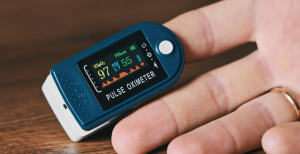

Long COVID, also called post-COVID condition, can affect people in very different ways. The Centers for Disease Control and Prevention reports that more than 200 symptoms have been identified, with commonly reported concerns including fatigue, post-exertional malaise, difficulty concentrating, memory changes, sleep problems, dizziness, shortness of breath, and heart palpitations.
So why are hyperbaric oxygen therapy and Long COVID being discussed together?
The answer begins with understanding what HBOT does and why some of the biological changes associated with post-COVID symptoms may overlap with mechanisms influenced by increased oxygen availability.
Long COVID describes health problems that continue, return, or develop following a COVID-19 infection. Symptoms can persist for months or longer and may involve multiple systems throughout the body.
For some people, the most noticeable issue is extreme fatigue. For others, it may be difficulty concentrating, headaches, sleep disruption, shortness of breath, changes in heart rate, pain, dizziness, or symptoms that become worse after physical or mental exertion.
This wide range of symptoms makes Long COVID particularly challenging. Two people can have very different experiences even if they initially had similar COVID-19 infections.
Research into post-COVID conditions has identified several possible contributing mechanisms, including inflammation, changes in vascular function, altered immune responses, neurological changes, and disturbances involving cellular energy production.
That complexity is one reason there is no single approach that works for everyone.
Oxygen is fundamental to cellular energy production.
Every cell in the body depends on oxygen for numerous biological processes, including the production of ATP, the primary energy currency used by cells.
Under normal conditions, most oxygen in the bloodstream is carried by hemoglobin inside red blood cells. However, increasing the pressure of the environment while a person breathes oxygen can substantially increase the amount of oxygen dissolved directly in the plasma.
This is one of the distinctive characteristics of HBOT.
Rather than relying exclusively on oxygen carried by red blood cells, increased pressure allows more oxygen to become dissolved in the liquid portion of the blood. This can increase the amount of oxygen available to tissues.
For someone dealing with persistent fatigue or other post-COVID symptoms, the question becomes whether improving oxygen availability can influence some of the physiological processes associated with those symptoms.
That is where the scientific discussion around HBOT and Long COVID becomes particularly interesting.
The reasoning behind using HBOT for people with Long COVID is not that the chamber eliminates the virus.
Instead, researchers have been interested in whether HBOT may influence several physiological processes that could be relevant to post-COVID conditions.
These include oxygen availability, vascular function, inflammation, mitochondrial activity, and neurological function.
Long COVID research is still developing, and the condition itself is highly variable. Therefore, it is important to view HBOT as an area of investigation rather than a universally established answer.
Some clinical studies have reported encouraging findings, while other randomized trials have not demonstrated a significant advantage over sham procedures.
That distinction matters.
One of the more frequently discussed randomized controlled trials involved 73 people with post-COVID symptoms lasting at least three months. Participants were assigned to either HBOT or a sham protocol over 40 sessions.
The study reported improvements associated with HBOT in several areas, including global cognitive function, attention, executive function, energy, sleep, psychiatric symptoms, and pain interference.
Another study from the same research group examined brain connectivity using functional MRI and diffusion tensor imaging. Researchers reported changes in functional and structural brain connectivity following HBOT and found associations between certain connectivity changes and improvements in attention and executive function.
Longer-term follow-up has also been reported. A 2024 study following a subgroup of patients from an earlier randomized trial found that several improvements reported after HBOT were still present at long-term follow-up, including improvements involving sleep and quality-of-life measures.
However, the research is not uniformly positive.
A 2025 randomized, placebo-controlled trial involving 101 patients compared different oxygen and pressure conditions. The investigators found no significant differences between groups in subjective symptoms, functional measures, or cognitive performance and concluded that further investigation is needed before HBOT is broadly promoted for Long COVID.
Another randomized phase II trial, known as HOT-LoCO, compared 10 HBOT sessions with a sham protocol in 80 people with Long COVID. Both groups improved, but the study did not find a significant difference between HBOT and placebo in its primary physical-function measures at 13 weeks.
These findings highlight an important point: HBOT research in Long COVID is promising but still developing.
Long COVID is not one single condition.
A person whose primary concern is cognitive dysfunction may have a very different underlying situation from someone whose major symptoms involve exertional intolerance, breathing difficulties, sleep problems, or autonomic symptoms.
That means response to any intervention may vary considerably.
The same issue can be seen in clinical research. In the 2025 randomized study, individual responses varied considerably, including improvements reported by some participants in the comparison group.
This variability is one reason practitioners should avoid promising a specific outcome from HBOT.
Instead, patient selection, medical history, symptoms, contraindications, medications, and overall health should all be considered before beginning a hyperbaric program.
Brain fog is one of the symptoms most frequently associated with Long COVID.
People may describe it as difficulty concentrating, forgetfulness, slower thinking, trouble finding words, or feeling mentally exhausted after tasks that previously seemed easy.
The potential relationship between HBOT and cognitive symptoms is one of the more interesting areas of research.
In the 73-person randomized controlled trial, researchers reported improvements in global cognitive function, attention, and executive function following HBOT compared with sham exposure.
The brain-imaging research also adds another layer to the discussion, with researchers observing changes in functional and structural connectivity following HBOT.
These findings do not establish HBOT as a guaranteed solution for brain fog. They do, however, provide a scientific basis for continuing to investigate how changes in oxygen availability and pressure may interact with neurological function.
Fatigue can be one of the most disruptive Long COVID symptoms.
It is often more than simply feeling sleepy. Some people report that routine activities can require substantially more effort than they did before infection. Others experience post-exertional malaise, in which symptoms worsen after physical or mental activity.
Because oxygen is central to cellular energy production, oxygen availability is an important consideration when discussing HBOT.
The previously mentioned randomized controlled trial reported improvement in the energy domain among participants receiving HBOT.
At the same time, not every trial has produced the same results. The HOT-LoCO trial did not find a significant advantage over sham exposure for its primary physical-function outcomes.
This is why responsible HBOT education should focus on potential mechanisms and available evidence rather than guarantees.
Long COVID has been associated with complex biological changes that may involve inflammatory and immune processes.
HBOT is being studied partly because increased oxygen availability can influence a number of physiological pathways.
Oxygen also plays an important role in mitochondrial energy production. Mitochondria use oxygen as part of the process through which cells generate ATP.
When researchers study HBOT, they therefore look beyond simply asking whether someone feels better. They can also examine changes in physiological function, cognitive performance, vascular measures, imaging, and other objective outcomes.
This broader approach is important because Long COVID can fluctuate naturally.
A person’s symptoms may improve, worsen, or change over time, making it difficult to determine exactly what caused an improvement.
Clinical experience can help practitioners identify patterns, generate questions, and understand how patients respond in real-world settings.
However, clinical experience is not the same thing as controlled scientific evidence.
A practitioner may work with hundreds of people and observe encouraging changes, but those observations cannot independently establish that HBOT caused those changes.
That is why clinical experience and research should be considered together.
The experiences of practitioners can help identify important areas for investigation, while randomized controlled trials help determine whether an intervention performs better than a comparison condition.
For patients considering HBOT for Long COVID, both perspectives are valuable.
People with Long COVID should not feel that they have to choose one approach and ignore everything else.
Because symptoms can involve multiple systems, comprehensive care may include medical evaluation, activity management, rehabilitation when appropriate, sleep support, nutrition, medication review, and management of individual symptoms.
HBOT may be considered as one component of a broader strategy when a qualified healthcare professional determines that it is appropriate.
Before starting HBOT, patients should also be screened for factors that may affect safety or suitability.
Hyperbaric oxygen therapy is not risk-free. The U.S. Food and Drug Administration has specifically emphasized the importance of following manufacturer instructions, maintaining fire-prevention measures, ensuring proper grounding, and providing appropriate staff training.
This is especially important for clinics offering HBOT outside traditional hospital environments.
If you are considering hyperbaric oxygen therapy for persistent post-COVID symptoms, ask questions before committing to a protocol.
Consider asking:
A responsible provider should be comfortable answering these questions and discussing both the potential benefits and limitations of the available evidence.
The interest in HBOT for Long COVID comes from a logical biological question: could increasing oxygen availability under pressure influence some of the physiological processes associated with persistent post-COVID symptoms?
There are reasons to investigate that possibility.
Research has reported improvements in areas such as cognitive function, attention, executive function, energy, sleep, pain, and quality of life in some patient groups.
At the same time, newer randomized research has produced mixed findings, including trials in which HBOT did not outperform sham exposure on important outcomes.
So the most accurate way to describe HBOT for Long COVID today is that it is an actively researched option with encouraging findings in some studies, but the evidence remains mixed and additional high-quality research is needed.
For practitioners, this means careful patient selection, appropriate screening, proper protocols, and ongoing monitoring are essential.
For patients, it means being cautious of anyone promising guaranteed results.
HBOT is a powerful physiological intervention, and understanding both its potential and its limitations is an important part of using it responsibly.
Whether you are a patient exploring HBOT or a practitioner interested in adding hyperbaric oxygen therapy to your practice, education is an important first step.
HBOT USA provides educational resources for patients and practitioners, including information about how HBOT works, hyperbaric equipment, practitioner education, and clinical considerations.
For practitioners, safety and compliance should remain a priority. HBOT involves pressurized environments and elevated oxygen concentrations, making proper training, equipment procedures, fire prevention, and staff education essential.
If you are new to HBOT, take the time to understand the technology, the evidence, the safety requirements, and the limitations before incorporating it into a patient care strategy.
Long COVID remains an evolving area of medicine. As researchers continue to study its underlying mechanisms and potential interventions, HBOT will remain an important topic of investigation.
The goal should not be to promise an answer before the evidence is ready. Instead, it is to understand the science, recognize where HBOT may have potential, and use it responsibly when appropriate.
Medical Disclaimer: The information in this article is provided for general educational purposes only and is not medical advice, diagnosis, or individualized care. HBOT is not a direct management for SARS-CoV-2 and should not be presented as a cure for Long COVID. Anyone experiencing persistent symptoms after COVID-19 should work with an appropriate healthcare professional for evaluation and individualized care. HBOT should be administered by appropriately trained professionals using equipment and procedures consistent with applicable safety requirements.
